

Optimizing AI Infrastructure The Critical Role of Liquid Cooling
GPUs driving AI workloads produce heat that challenges air cooling. Direct liquid cooling with cold plates and coolant units efficiently manages thermal loads w...
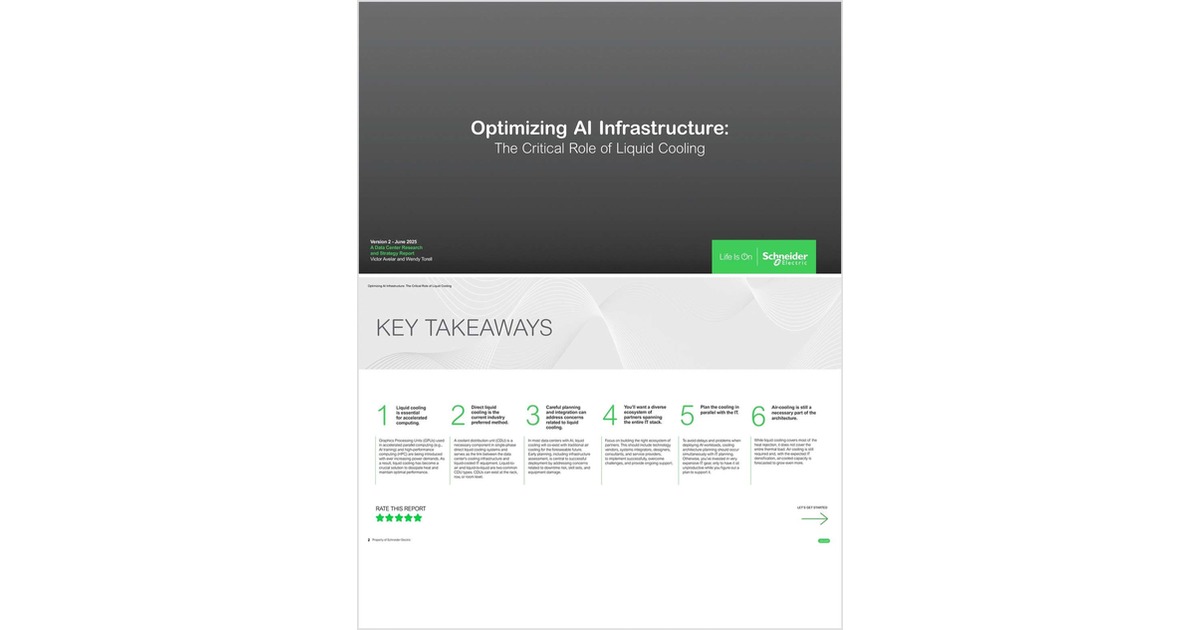
Key Takeaways for Enterprise Leaders
Actionable strategies verified against enterprise industry benchmarks and real-world rollouts.
Statistical evidence and market data to support executive budgeting and strategic alignment.
Executive Abstract
Peer ReviewedAI advancements, especially GPU-powered workloads, are pushing data centers beyond air cooling limits. With GPUs consuming up to 1,400 watts, organizations face challenges in heat management and efficiency.
This white paper highlights direct liquid cooling as the preferred solution for AI infrastructure, addressing concerns like downtime risk, equipment damage, and skill requirements. Key insights include:
· Coolant distribution units (CDUs) and their role in heat transfer
· Evaluating infrastructure compatibility with liquid cooling
· Best practices for hybrid cooling environments
Discover how planning and the right ecosystem enable successful liquid cooling for AI workloads.
Unlock Report Access
Provide your corporate details for instant PDF access.
Related Executive Research
 Asset
Asset
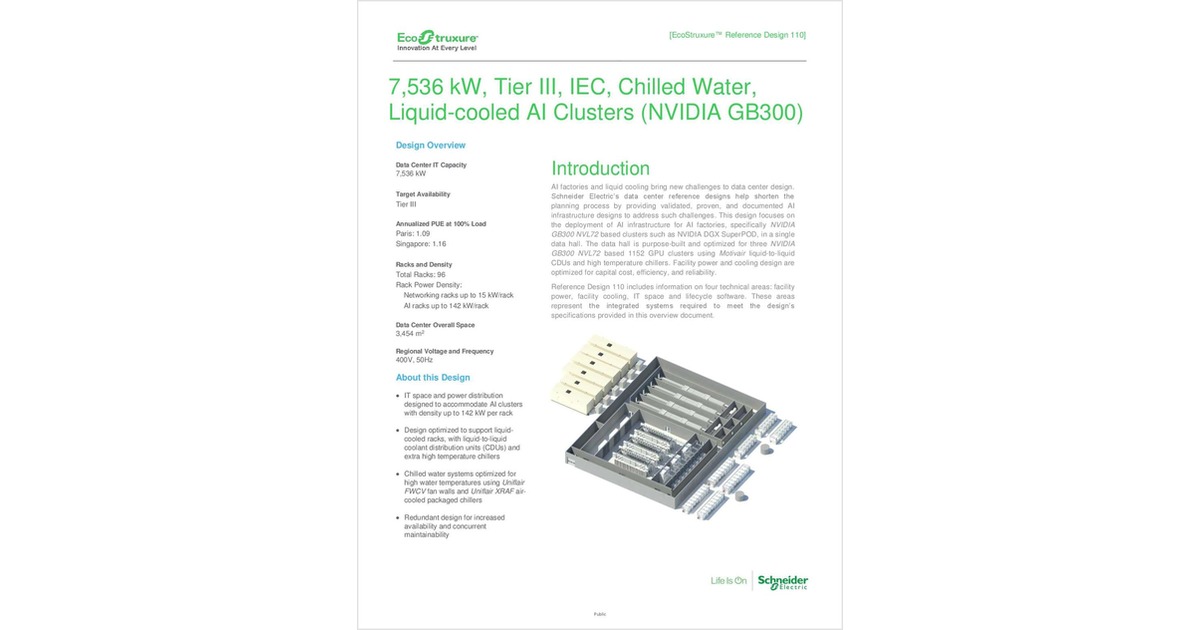
7,536 kW, Tier III, IEC, Chilled Water, Liquid-cooled AI Clusters
This design tackles AI infrastructure challenges by optimizing power and cooling for GPU clusters up to 142 kW per rack. The Tier III setup achieves a PUE of 1....
 White Paper
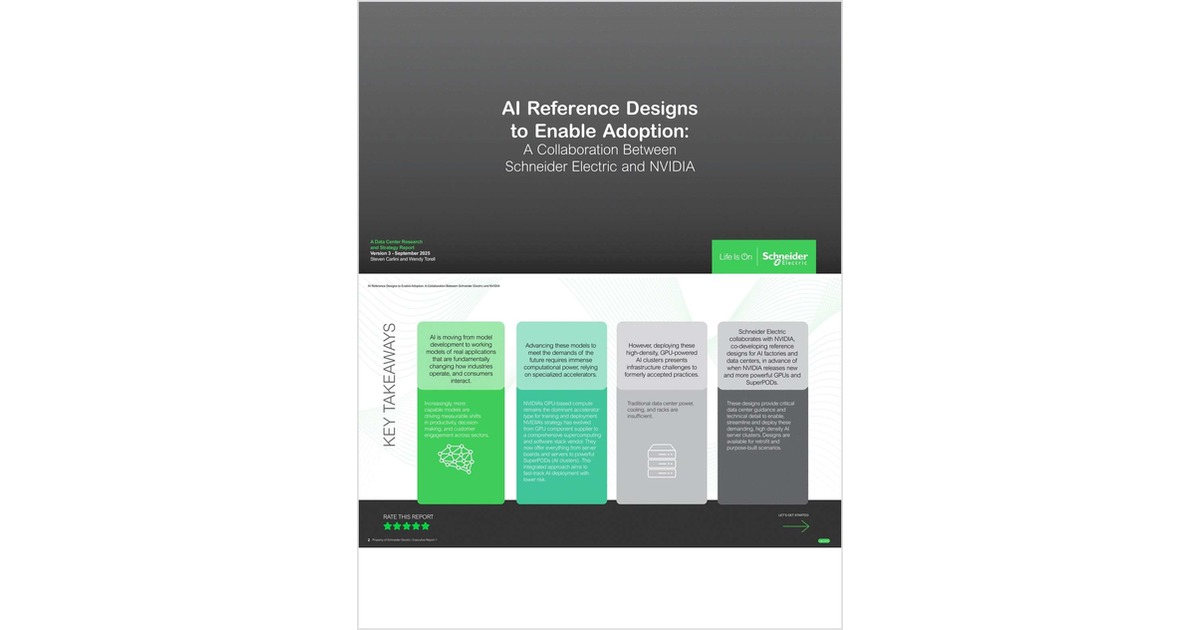
AI Reference Designs to Enable Adoption A Collaboration Between Schneider Electric and NVIDIA
Schneider Electric and NVIDIA have developed reference designs for AI data centers, addressing challenges of high-density GPU clusters. These blueprints support...
 Report
Data Center Capabilities: Today & Tomorrow
We are entering a period of unprecedented pressure as AI adoption accelerates, energy constraints tighten, and expectations around uptime and cybersecurity cont...